
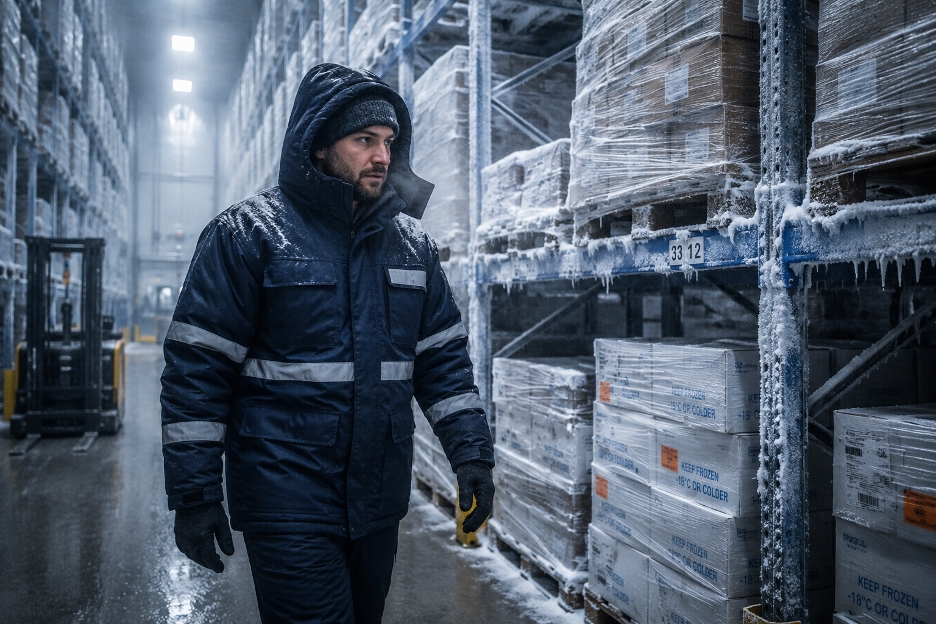
Cold storage facilities are a critical link in the food supply chain—but they’re also one of the more overlooked sectors when it comes to Workers’ Compensation exposure. Brokers with clients in refrigerated warehousing, blast freezing, or temperature-controlled distribution need to understand the unique and serious hazards present in these environments, and why standard WC policies may not be enough.
The Hidden Dangers of Working in the Cold
Working in environments that hover near or below freezing creates physiological risks that simply don’t exist in a typical warehouse or office setting. The most significant include:
Frostbite and Cold Stress
Workers who spend extended shifts in walk-in freezers or refrigerated loading docks are at real risk of frostbite—particularly to fingers, toes, and facial extremities. Prolonged cold exposure also leads to cold stress, which affects coordination, decision-making, and reaction time. Workers who are cognitively impaired by cold are more prone to accidents. Claims from frostbite and cold-related illness can be substantial, especially when nerve damage or amputation is involved.
Ammonia Exposure
Many large cold storage and refrigeration systems use anhydrous ammonia as a refrigerant. While ammonia is effective, it is also a highly toxic chemical. Even small leaks can cause eye irritation, respiratory damage, and chemical burns. A major leak can be fatal. Workers’ Comp claims from ammonia exposure events can include long-term pulmonary treatment and disability benefits. Brokers need to ask whether their clients have adequate emergency response protocols and whether any previous incidents have occurred.
Slip and Fall Injuries
Ice, condensation, and wet floors from refrigeration cycling are constant slip hazards. Falls in cold storage environments can be severe because workers are often wearing bulky personal protective equipment that limits their ability to break a fall. Head injuries, back injuries, and broken bones are common outcomes.
Forklift and Crush Injuries
Cold storage facilities rely heavily on powered industrial trucks and high-density racking systems. Limited visibility from fogged breath, reduced lighting, and bulky outerwear increases the risk of forklift accidents. Crush injuries from racking collapses or being struck by a load are unfortunately not uncommon in these environments.
Coverage Gaps Brokers Should Watch For
Several coverage issues commonly arise in cold storage accounts:
- Classification errors: Workers may be improperly classified under a general warehouse code rather than a specific refrigerated warehouse classification, leading to rating inaccuracies and potential audit exposure.
- Exclusions for chemical exposure: Some standard WC policies may have limitations around chemical incidents that need to be addressed or endorsed.
- Contractor coverage gaps: Maintenance technicians who service refrigeration systems are often independent contractors—make sure they carry their own WC or are added as needed.
- Occupational disease claims: Conditions like cold-induced asthma or peripheral neuropathy from prolonged cold exposure may be harder to tie to a single incident, requiring careful claims management.
What Brokers Can Do
Start with a thorough account review. Ask clients about their refrigerant type, temperature ranges workers are exposed to, shift lengths, PPE programs, and incident history. Understand the layout of the facility and the ratio of office-to-cold-environment workers.
From there, work with a specialty market that understands industrial cold storage risks. Not every carrier is comfortable with ammonia refrigerant exposure or has the claims handling expertise to manage complex cold-related injury claims. Comp Central works with markets that understand these nuances and can offer competitive coverage for clients in the refrigerated supply chain.
Don’t let your clients’ coverage freeze out in the cold. Contact Comp Central to explore Workers’ Comp solutions designed for cold storage and refrigerated distribution risks.