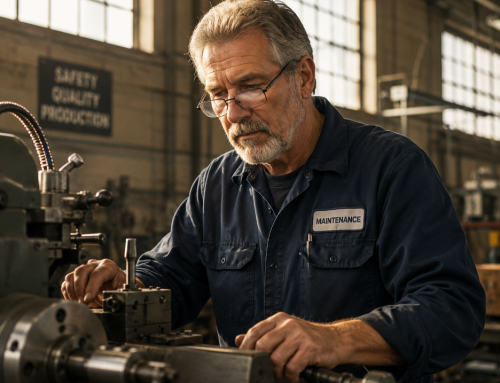

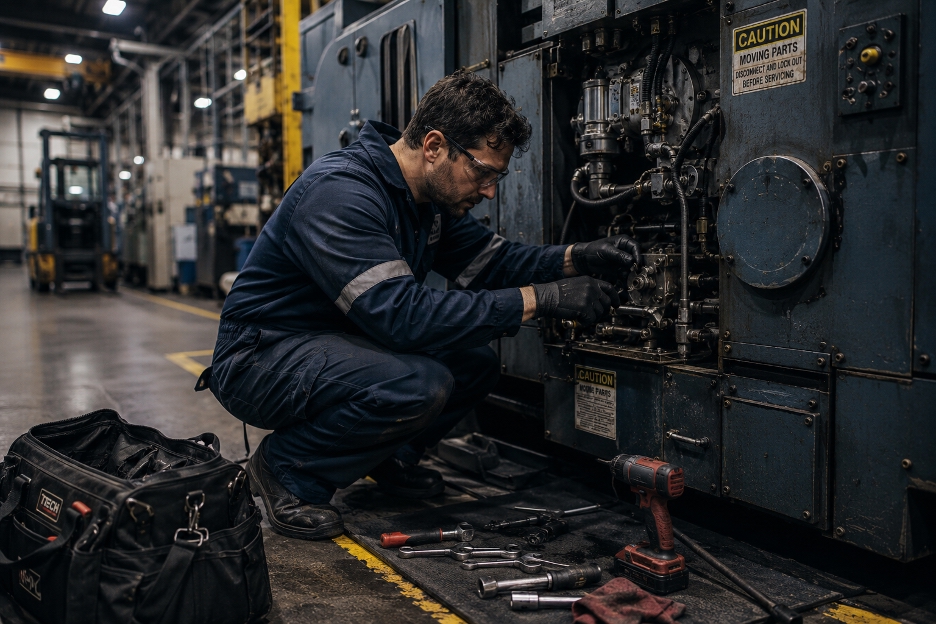
Mobile equipment repair contractors occupy a unique and often misunderstood space in the insurance market. They’re skilled tradespeople who travel to job sites—factories, farms, construction yards, warehouses—to service, diagnose, and repair heavy machinery. Their work is physically demanding, technically complex, and genuinely dangerous. Yet many brokers and clients alike assume that a general liability policy is sufficient coverage for this class of business. It isn’t.
What General Liability Covers—and What It Doesn’t
General liability insurance protects a business from third-party claims: if a customer’s equipment is damaged during repair, or a client trips over the technician’s tools, GL steps in. What it does not cover is the technician themselves. If a repair tech is injured on the job—pinned by equipment, burned by hydraulic fluid, or electrocuted while servicing an industrial panel—the GL policy offers no wage replacement, no medical coverage, and no protection from a lawsuit brought by the employee against the employer.
That’s where Workers’ Compensation comes in. WC is the safety net that covers the worker, not the work product. For equipment repair contractors who employ technicians, it’s not optional—it’s legally required in virtually every state.
The Real Risks Facing Equipment Repair Techs
The hazard profile for mobile repair technicians is serious and specific. Brokers should be familiar with the most common injury types in this sector:
Crush and Struck-By Injuries
Working under or around heavy machinery carries obvious crush risks. A piece of equipment can shift unexpectedly during service, hydraulic systems can fail, and improperly supported loads can collapse. Even experienced technicians are injured when machines behave unpredictably. Crush injuries often involve broken bones, internal injuries, and long-term disability claims.
Burns from Hydraulic Fluid and Chemicals
High-pressure hydraulic lines can rupture and spray scalding fluid at velocities sufficient to penetrate skin. Chemical burns from industrial fluids, solvents, and cleaning agents are also common. Depending on the severity, burn injuries can require extended medical treatment and skin grafting.
Electrical Injuries
Technicians who service electric motors, control panels, and modern fleet vehicles with high-voltage systems are at risk of arc flash, shock, and electrocution. Electrical injuries are among the most catastrophic in any industry, with long recovery timelines and high medical costs.
Musculoskeletal Strain
The physical nature of equipment repair—lifting, crouching, working in confined spaces, using high-torque tools—creates significant strain on backs, shoulders, knees, and wrists. These injuries may not be acute events, but repetitive strain claims accumulate over time and can be just as costly as traumatic injuries.
Coverage Considerations for Brokers
When evaluating a client in the equipment repair space, brokers should investigate several key areas:
- Employee versus subcontractor classification: Many repair firms use a mix of W-2 employees and 1099 subs. As discussed across this industry, misclassification creates significant exposure.
- Class codes: Equipment repair technicians may fall under a variety of classification codes depending on the type of equipment serviced. Using the wrong code can result in audit surprises.
- On-site work at third-party locations: When employees work at a client’s facility, both the employer and the host facility have potential WC exposure. Brokers should clarify this arrangement.
- Owned versus non-owned equipment: The machinery being repaired is owned by the client, not the repair contractor—but injuries that occur during repair are still the repair contractor’s WC responsibility.
Finding the Right Market
Equipment repair contractors with good safety records and clean loss histories can often find competitive voluntary market coverage. Those with prior losses or specialty equipment (high-voltage systems, pressure vessels, cranes) may need access to surplus lines markets that understand the nuanced risks involved.
At Comp Central, we connect brokers with markets that understand the equipment service industry—from farm machinery repair to industrial motor service to mobile fleet mechanics. We help you find coverage that actually fits the risk, so your client isn’t exposed and you aren’t either.
If you have clients in the equipment repair or mobile service space, contact Comp Central to discuss Workers’ Comp solutions that go beyond general liability.