
Grocery and supermarket retail is one of the largest employment sectors in the United States, and it consistently ranks among the industries with high Workers’ Compensation claim frequency. The nature of the work—fast-paced, physically demanding, often in wet or cluttered environments—creates a steady stream of injuries that, while rarely catastrophic individually, accumulate into significant WC cost exposure over time. Brokers with retail grocery clients need to understand the specific risk profile and how to help manage it.
Why Grocery Retail Is a High-Frequency WC Environment
Slip-and-fall injuries are the most common and well-known hazard in grocery retail, but the exposure runs much deeper than wet produce floors. The full picture of WC risk in this environment includes:
Slip, Trip, and Fall Hazards
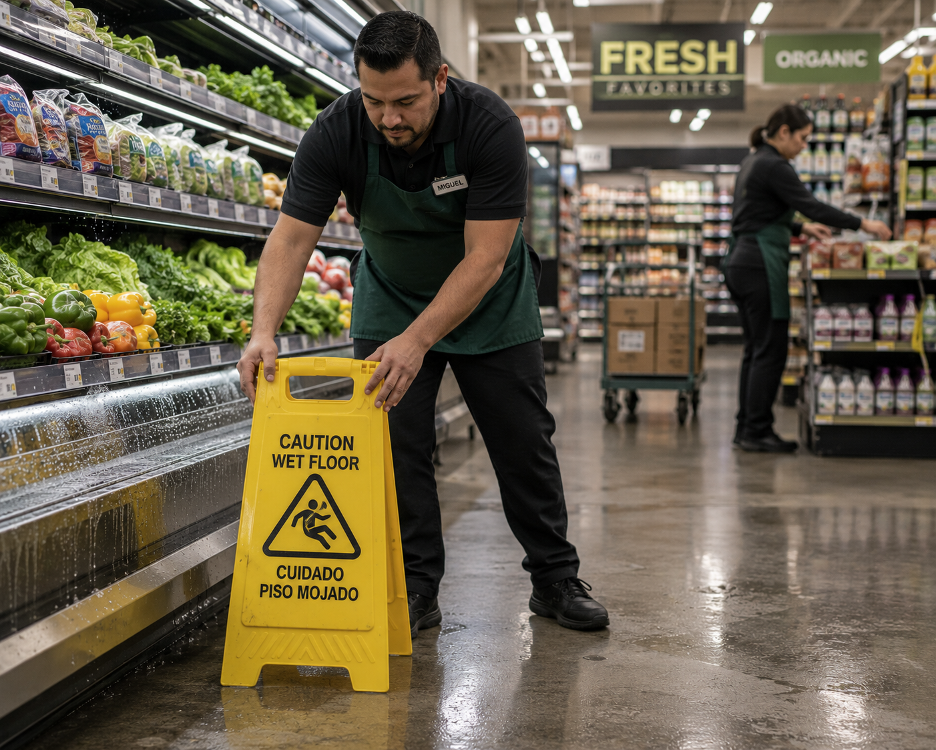
Grocery environments create constant slip-and-fall exposure through spilled liquids in beverage aisles, condensation from refrigerated cases, wet floors from mopping during store hours, produce trimmings and water from misting systems, and tracked-in rain and snow during weather events. These hazards affect both customers and employees—though the WC concern is exclusively the employee side.
Falls can result in sprains, fractures, and head injuries. Even “minor” falls can produce back and shoulder injuries that generate substantial medical and indemnity costs. The frequency of slip events in a high-traffic grocery environment makes this a persistent and significant WC exposure.
Repetitive Strain in Stocking and Checkout
Cashiers who scan and bag hundreds or thousands of items per shift develop repetitive strain injuries to wrists, elbows, and shoulders. Stock clerks who lift and place product from floor level to overhead bins throughout an eight-hour shift accumulate back and shoulder stress. Deli and bakery employees who perform the same food preparation motions repeatedly throughout the day develop hand and wrist pathology over months and years.
None of these are single-incident injuries. They are the product of daily repetition over extended employment, and they often don’t manifest as WC claims until the cumulative damage becomes symptomatic—sometimes years into an employee’s tenure.
Heavy Lifting and Material Handling
Receiving dock employees and stock crews handle pallets, cases, and bulk product that can weigh hundreds of pounds per delivery. Improper lifting technique, rushed unloading, inadequate equipment, and fatigue all contribute to acute and chronic back injuries in this segment of the grocery workforce.
Cuts and Lacerations
Deli counters, meat departments, and bakeries involve knives, slicers, and cutting equipment that produce a steady stream of laceration injuries. While most are minor, deep cuts and slicing injuries can require sutures, nerve evaluation, and extended time off for healing.
The WC Premium Impact of Frequent Low-Severity Claims
As discussed in our piece on experience modification, frequent small claims can be more damaging to a mod score than a single large one. Grocery retailers who have multiple minor injury claims each year—each one under $5,000—may find their mod creeping steadily upward without any single event that feels “serious enough” to explain the cost.
Brokers working with grocery clients should pull loss runs annually and categorize claims by type, severity, and location within the store. This analysis often reveals patterns—a particular department, shift, or store location that generates disproportionate claims—that can be addressed with targeted interventions.
Loss Control Strategies That Work
- Wet floor protocols: Standardized procedures for spill response, including immediate barricading and documented cleanup times
- Non-slip footwear programs: Employer-subsidized safety footwear for all floor staff reduces slip frequency meaningfully
- Ergonomic checkout design: Adjustable checkout stands, proper mat placement, and scan gun availability reduce cashier strain
- Powered equipment for receiving: Pallet jacks, lift gates, and team lifting protocols reduce material handling injuries at the dock
- Near-miss reporting culture: Employees who report a close call before an injury occurs give management the chance to fix the hazard proactively
Comp Central works with brokers to find WC solutions for grocery and retail clients—including those with challenging frequency histories who need a carrier willing to invest in loss control partnership.
Contact Comp Central to explore Workers’ Comp strategies for your grocery and retail clients.