
The number of women entering construction, manufacturing, the trades, and other historically male-dominated industries has grown steadily over the past decade. This is a positive development—but it has also brought to light a set of Workers’ Compensation issues that are too often overlooked. Brokers who understand these dynamics can help clients build safer workplaces and more equitable claims management practices.
The Ergonomic Mismatch Problem
Workplace ergonomic standards—including workstation heights, tool grip sizes, load-carrying expectations, and equipment controls—have historically been designed around the anthropometric measurements of the average male worker. When women enter environments built to those standards, they often face a daily ergonomic mismatch that, over time, significantly increases injury risk.
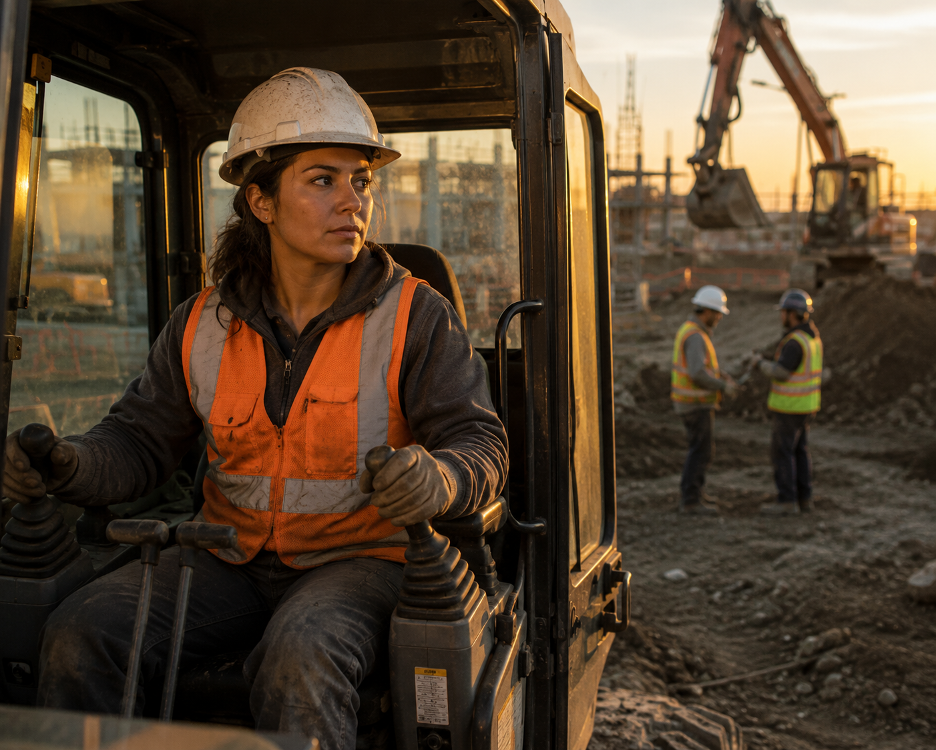
Consider a female ironworker whose workstation was set at a height optimized for workers six inches taller. She compensates by changing her posture—adding cumulative stress to her back and shoulders with every task. Or a woman operating controls on a piece of heavy equipment designed for larger hands, requiring greater grip force and awkward wrist positioning throughout her shift. Neither of these situations may trigger an acute injury, but both steadily accumulate tissue damage that leads to Workers’ Comp claims months or years later.
Brokers can encourage clients to conduct ergonomic assessments with gender equity in mind—ensuring that workstations, tool sizes, and job rotation schedules accommodate the full range of worker sizes and physical characteristics on the crew.
Personal Protective Equipment That Doesn’t Fit
The PPE problem in male-dominated industries is well-documented and ongoing. Gloves designed for men are too large for most women’s hands, compromising dexterity and grip. Hard hats don’t fit properly. Safety harnesses designed for male body proportions can be genuinely dangerous on a female body—failing to protect, or worse, causing injury during a fall event.
When PPE doesn’t fit properly, workers face a choice: wear ill-fitting equipment and hope for the best, or go without. Many choose one or the other at different points during their day, creating real exposure gaps. WC claims that might have been prevented by properly fitted PPE become the employer’s liability.
Brokers should encourage clients to maintain an inventory of properly sized PPE for all workers—not as a nicety, but as a risk management imperative. Loss control carriers increasingly recognize gender-appropriate PPE programs as a positive safety indicator.
Underreported Injuries: A Hidden WC Cost Driver
Research consistently shows that women in male-dominated workplaces are more likely to underreport injuries than men. Contributing factors include fear of being perceived as weak or unable to handle the job, concerns about retaliation or being sidelined from desirable assignments, and a workplace culture that discourages complaint.
Underreported injuries don’t disappear—they compound. A shoulder strain that might have resolved with early intervention and modified duty instead becomes a rotator cuff tear requiring surgery. A knee problem that could have been addressed with rest and physical therapy advances to the point of requiring replacement. Each of these escalation paths leads to dramatically higher WC costs.
Employers can address underreporting through confidential injury reporting systems, clearly communicated no-retaliation policies, and training for supervisors on how to create a culture where injury reporting is encouraged rather than penalized.
Pregnancy, Return to Work, and WC Intersections
Pregnancy accommodation in physically demanding jobs creates complex situations that can intersect with Workers’ Comp. If a pregnant worker is injured while performing duties that should have been modified under applicable accommodation laws, there may be both WC and employment liability implications. Brokers should encourage clients with female workers in physical roles to have written pregnancy accommodation protocols reviewed by legal counsel.
The Broker’s Role in Advancing Equity and Reducing WC Costs
Addressing the unique WC exposures faced by women in male-dominated fields isn’t just about fairness—it’s smart risk management. Employers who take proactive steps to ensure ergonomic suitability, proper PPE fit, and a reporting-friendly culture will see fewer claims, lower mod scores, and more stable WC premiums.
Comp Central supports brokers in helping clients assess and address workforce-specific WC risks, including those arising from gender dynamics in physically demanding industries.
Contact Comp Central to discuss Workers’ Comp strategies that support all workers and reduce exposure across your client’s operations.