
At first glance, commercial cleaning doesn’t seem like a high-hazard industry. No heavy machinery, no heights, no power tools. But the Workers’ Compensation claims data tells a different story. Janitorial and commercial cleaning workers face a diverse set of occupational hazards that are frequently underestimated—by clients, by carriers, and sometimes by brokers. Understanding these risks is the first step to providing the right coverage and protecting your clients from costly surprises.
Chemical Exposure: More Than Just a Smell
Commercial cleaners routinely handle industrial-strength disinfectants, degreasers, bleach-based compounds, and specialty solvents. Skin contact and inhalation are daily realities for workers who may not have received adequate training in chemical handling or who lack appropriate personal protective equipment.
Prolonged chemical exposure can lead to occupational asthma, contact dermatitis, eye damage, and systemic toxicity. These are “slow burn” injuries that develop over time rather than in a single incident—which makes them harder to detect and, in some states, harder to tie definitively to employment. But Workers’ Comp occupational disease claims in this space are real and can be expensive.
Brokers should ask clients whether Material Safety Data Sheets (SDS) are available to workers, whether proper ventilation is in place, and whether chemical handling training is documented.
Sharps and Biohazard Risks
This one surprises many people. Commercial cleaners who service medical offices, gyms, schools, and even general office buildings can encounter used needles, syringes, and other biohazardous materials in trash receptacles, restrooms, and common areas. A needlestick injury triggers not just a WC claim, but an expensive protocol of bloodborne pathogen testing and post-exposure prophylaxis that can cost thousands of dollars—all before determining whether infection has occurred.
Clients in this space should have clear protocols for biohazard handling, and brokers should confirm that WC policies will cover bloodborne pathogen exposure events without ambiguity.
Overnight and Off-Hours Hazards
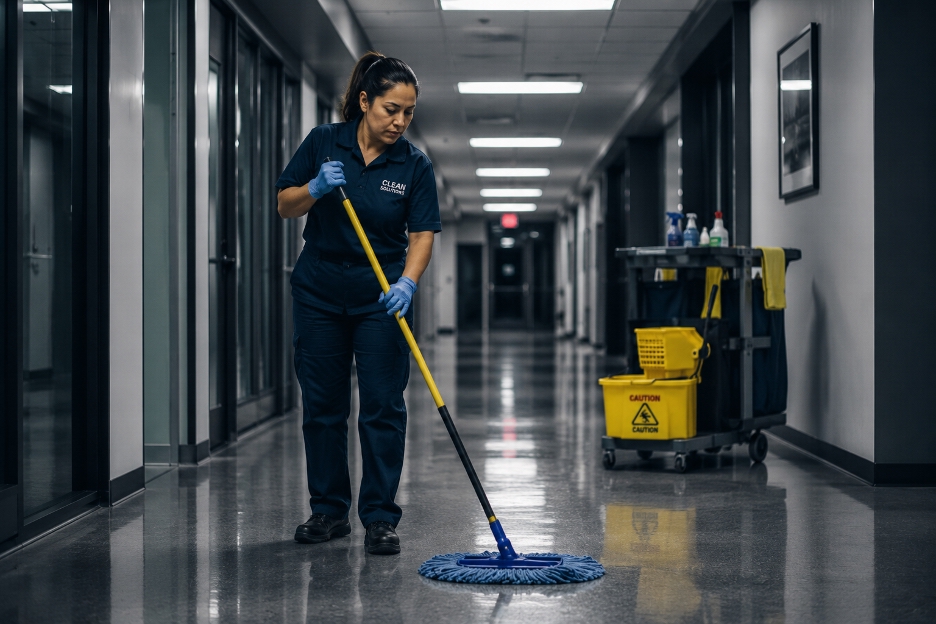
Much commercial cleaning happens after hours—late nights, early mornings, and weekends when the client’s facility is otherwise empty. This creates a unique risk profile:
- Delayed response to injuries: If a cleaner falls at 2 a.m. in an empty building, help may not arrive quickly. Delayed treatment correlates with worse outcomes and higher WC costs.
- Security risks: Lone workers in empty buildings face elevated risk of robbery, assault, and other crime-related incidents, which can create WC exposure if violence occurs during work hours.
- Unreported injuries: Workers cleaning in isolation are more likely to not report minor injuries, which then become major ones—and more costly WC claims down the line.
Slips, Falls, and Musculoskeletal Injuries
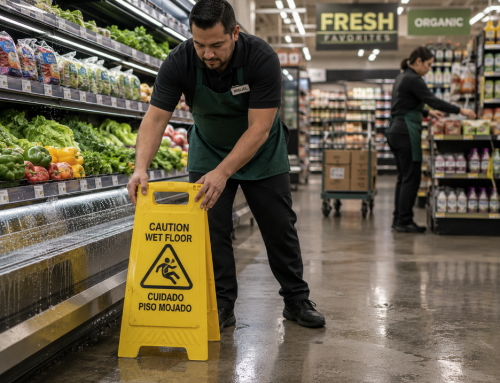
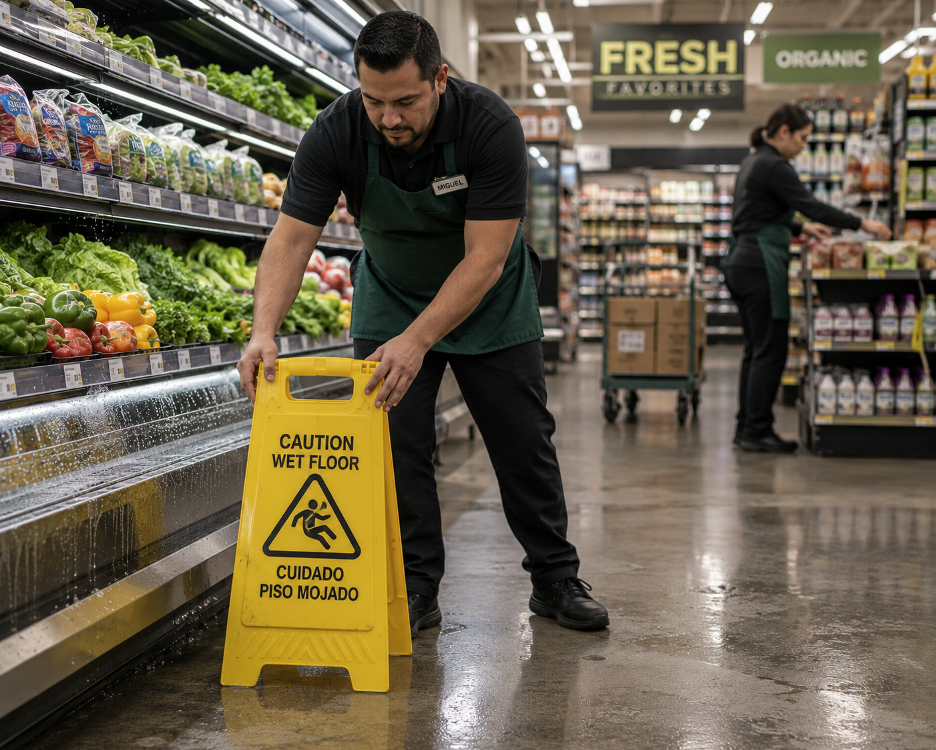
Wet floors, awkward mopping postures, heavy equipment (commercial floor buffers, vacuums, and extractors), and constant bending, lifting, and twisting all contribute to a high rate of musculoskeletal and slip-and-fall injuries. Back injuries and knee problems are perennial top claims in the janitorial classification.
The Misclassification Problem
Like other service industries, commercial cleaning is rife with misclassification issues. Many cleaning companies use a combination of part-time employees, seasonal workers, and 1099 subcontractors. Some use immigrant labor populations who may be reluctant to report injuries. And some business owners misrepresent their payroll or worker counts to reduce premiums—creating serious audit exposure.
Brokers need to have frank conversations with cleaning clients about how their workforce is structured. A thorough account review up front is far less painful than an audit adjustment or a denied claim.
Finding the Right Coverage
Commercial cleaning is a widely written class, but the specific risks outlined above require carriers familiar with the sector. Pay-as-you-go WC options can be especially valuable for cleaning companies with fluctuating headcounts. Some specialty markets offer programs specifically for janitorial businesses that bundle WC with appropriate GL and employee dishonesty coverages.
Comp Central helps brokers navigate the commercial cleaning market and find coverage that addresses the full scope of risk—not just the obvious parts.
Contact Comp Central to explore Workers’ Comp solutions for your commercial cleaning and janitorial clients.